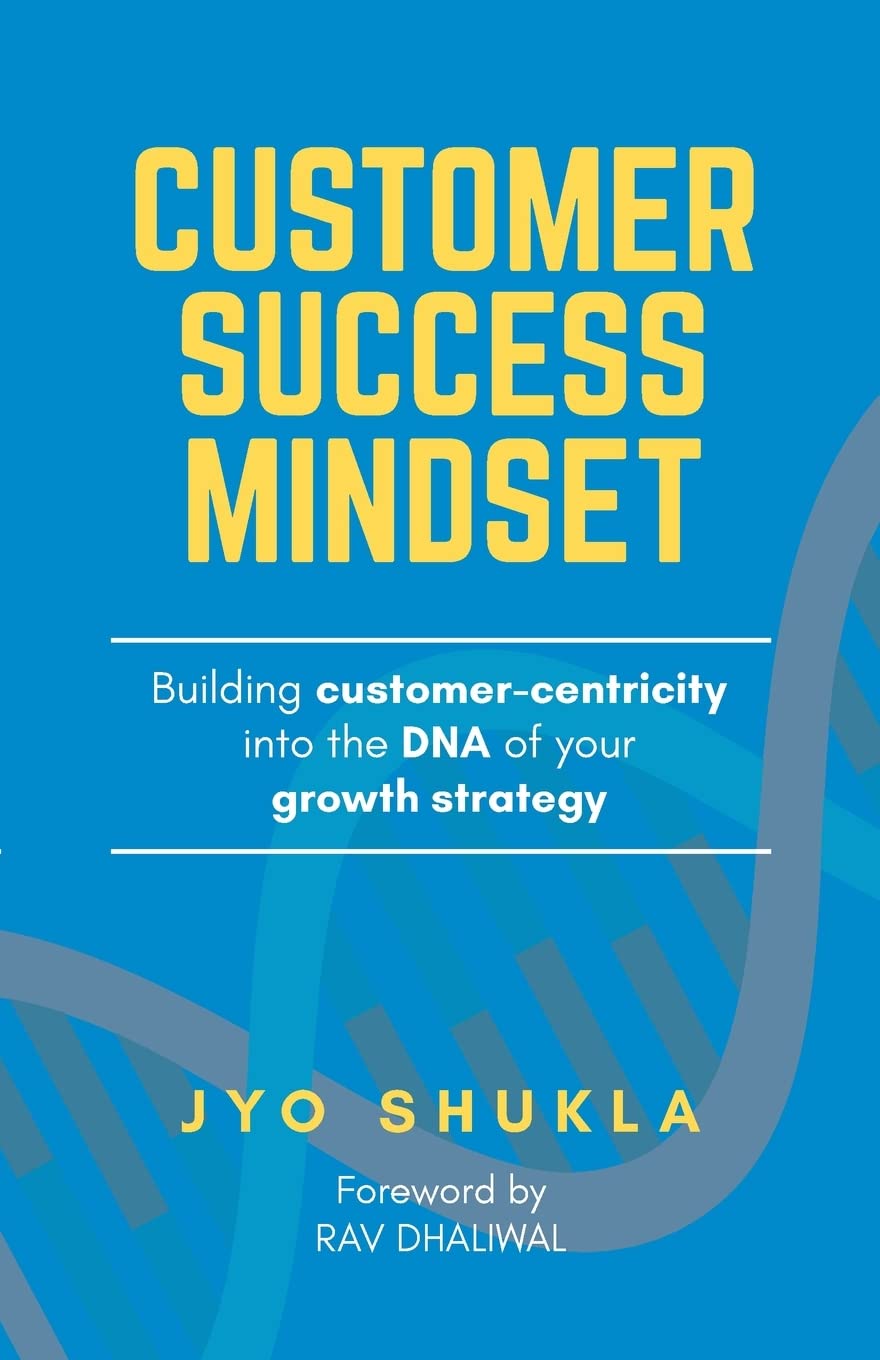
What Is a Customer Success Mindset — and Why Does It Matter?
By Jyo Shukla · · 7 min read
Draft for author review
A customer success mindset is a philosophy for business growth, developed by Jyo Shukla in her book Customer Success Mindset. It extends the familiar idea of a growth mindset to organisations, asking a simple question of every decision: will this help our customers reach the outcomes they came to us for?
That question sounds obvious. In practice, most businesses answer it in only one place — the Customer Success team — while product roadmaps, sales targets, marketing campaigns and pricing decisions are shaped by other priorities. The mindset closes that gap.
A short definition
Customer success isn’t a department. It’s a mindset.
Put plainly, a customer success mindset is the shared belief, held across leadership and every function, that a company grows sustainably when its customers succeed — and the habit of designing work around that belief.
Principle one: humans thrive on shared knowledge
People are social. In business, we trade recommendations constantly — the tool that saved us time, the partner that made us look good to our own customers, the vendor who picked up the phone when it mattered. Introductions are made in those conversations, and business is won.
But people only recommend what they have genuinely experienced as valuable. Advocacy cannot be bought or scripted; it is earned through outcomes. If you want most of your customers — not a handful — to speak up for you, customer-centricity has to sit at the centre of your strategy rather than at its edges.
Principle two: a customer-led growth model
Companies often describe themselves as sales-led, marketing-led or product-led, and assume they must choose one for each stage of growth. The book argues that customer-led growth is not a competing model. Done well, it ties into any of the others, because it gives product, sales and marketing a common understanding of what the customer’s most favourable outcome looks like.
Why it matters now
- Retention and expansion depend on customers realising value, not just buying it.
- Customers who have never been asked what success looks like for them rarely become advocates.
- Pricing conversations become easier when value is visible — and harder when it isn’t.
- Teams that share one definition of customer success waste less effort working against each other.
What it is not
A customer success mindset is not a slogan, a new job title, or a reason to say yes to every request. It is not a substitute for a capable Customer Success function either. It is the context that lets that function do its best work, because the rest of the organisation is pulling in the same direction.
Where to begin
Start by asking customers, directly, what a successful outcome looks like for them — then share those answers widely enough that a product manager, a salesperson and a finance lead could each repeat them. The book walks through how to build from there, from culture and team alignment to delivering value at scale.