Skip to content
Customer Success Mindset

The Mindset

What Is a Customer Success Mindset?

A customer success mindset is a philosophy for business growth, developed by Jyo Shukla. It extends the idea of a growth mindset to businesses and customer-centricity, and rests on two core principles.

1

Humans thrive on shared knowledge

People are social, and in business we constantly give and take recommendations — about products that saved us time, helped us do our jobs better, or strengthened our relationships with our teams and customers. Introductions are made, and business is won.

But people only recommend what they have genuinely enjoyed. They have to believe in it. To turn most of your customers — not just a few — into advocates, customer-centricity has to be at the centre of your business strategy.

2

A customer-led growth model

Companies often think they must be sales-led, marketing-led or product-led at each stage of growth. Done well, customer-led growth ties seamlessly into any of these models.

Its premise is that the work of every department — product, sales, marketing — is driven by a common understanding of what the customer’s most favourable outcomes would be.

Customer-centricity versus customer focus

Customer focus is about responsiveness — good service, quick replies, a pleasant experience. Customer-centricity is structural: the business is organised so that what it builds, sells, prices and supports all point towards the customer’s outcome. A company can be very customer-focused and still not customer-centric.

A function versus a company-wide mindset

A Customer Success team is valuable, but it cannot deliver customer outcomes alone. If promises made in the sale don’t match the product, or customer insight never reaches the roadmap, the CS team spends its time compensating. A mindset is shared: it shapes decisions wherever they are made.

Why customer outcomes matter to commercial growth

Customers who reach their goals are more likely to renew, expand and recommend. Those are commercial results — retention, account growth and new business through introductions. They follow from outcomes delivered, which is why the mindset treats outcomes as the starting point rather than an afterthought.

How cross-functional teams contribute

  • Leadership sets what gets measured and discussed.
  • Product turns customer goals into capability.
  • Sales and marketing make promises that the customer journey can keep.
  • Service and support prove, interaction by interaction, that the business means it — and surface insight for everyone else.

How to begin

  • Ask customers directly what success looks like for them.
  • Write those outcomes down in plain language and share them across teams.
  • Bring customer outcomes into planning and leadership conversations.
  • Use the book as a guided path for the cultural and operational work that follows.

For a deeper introduction, read What Is a Customer Success Mindset — and Why Does It Matter?
From Chapter 8 · Delivering Value at Scale

The HEART framework for digital Customer Success

Automation can scale touchpoints, but generic messages rarely speak to what matters to each customer. In the book, Jyo introduces HEART to keep digital Customer Success personal — including the simple practice of asking customers about their experience.

  1. Humanize
  2. Empathize
  3. Align
  4. Respond
  5. Track

Source: TheySaid — Personalizing Digital CS With the HEART Framework, excerpting Chapter 8 of Customer Success Mindset. Read our summary.

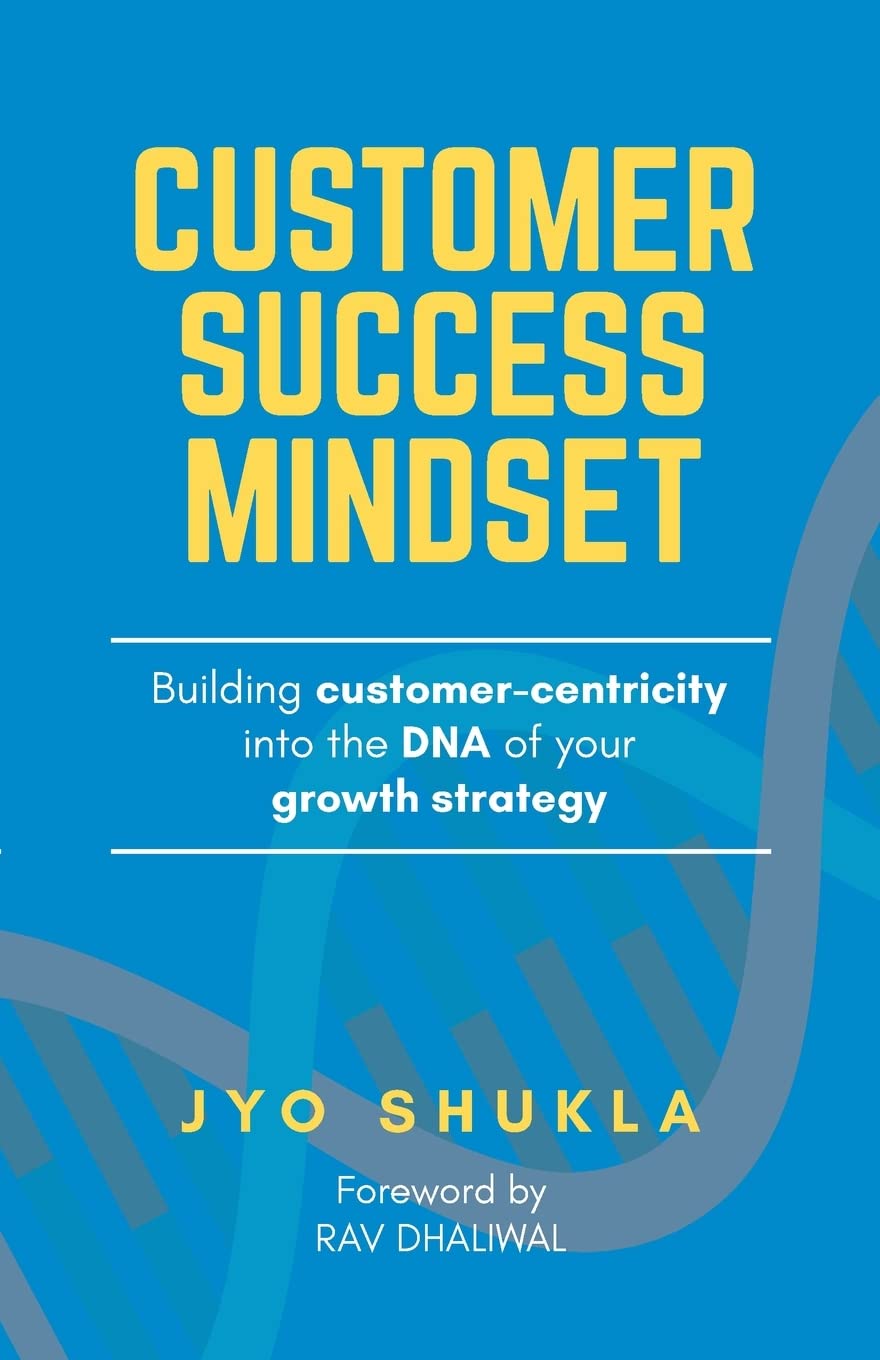
Cover of Customer Success Mindset: Building Customer-Centricity into the DNA of Your Growth Strategy by Jyo Shukla

Paperback · Hardcover · Kindle

Build customer success into the way you grow.

Customer Success Mindset by Jyo Shukla, with a foreword by Rav Dhaliwal. Choose your retailer below.

Get the Book